Let's name what's happening
Honestly, here's the thing. When your partner watches and waits, checking their phone, making that small sigh, the pleasure you were building evaporates. Orgasm isn't a performance metric. But when it's treated like one, your body gets the message loud and clear.
Partner pressure around orgasm is wildly common. It shows up as "Are you close?" asked five times. As impatience. As taking your silence as rejection instead of as evidence that your arousal needs space, not an audience. It shows up as sex that ends the moment they finish, or as the belief that if you don't orgasm, something is wrong with you. None of that is true.
Why orgasm feels impossible under pressure
Your nervous system has two basic states. Sympathetic (fight or flight, alert, tense) and parasympathetic (rest, digest, relax). Orgasm lives entirely in the parasympathetic system. Performance pressure floors the sympathetic accelerator. Those two things cannot coexist.
When a partner is watching the clock, your brain registers: this is not a safe space for your own pleasure. Your body responds by doing exactly what it's supposed to do in an unsafe situation. It shuts down sensation. It holds tension. It makes arousal shallow and orgasm impossible.
This is not a reflection on your body. This is your body protecting you from a situation where your pleasure doesn't come first.
The real reason a lemon vibrator helps here
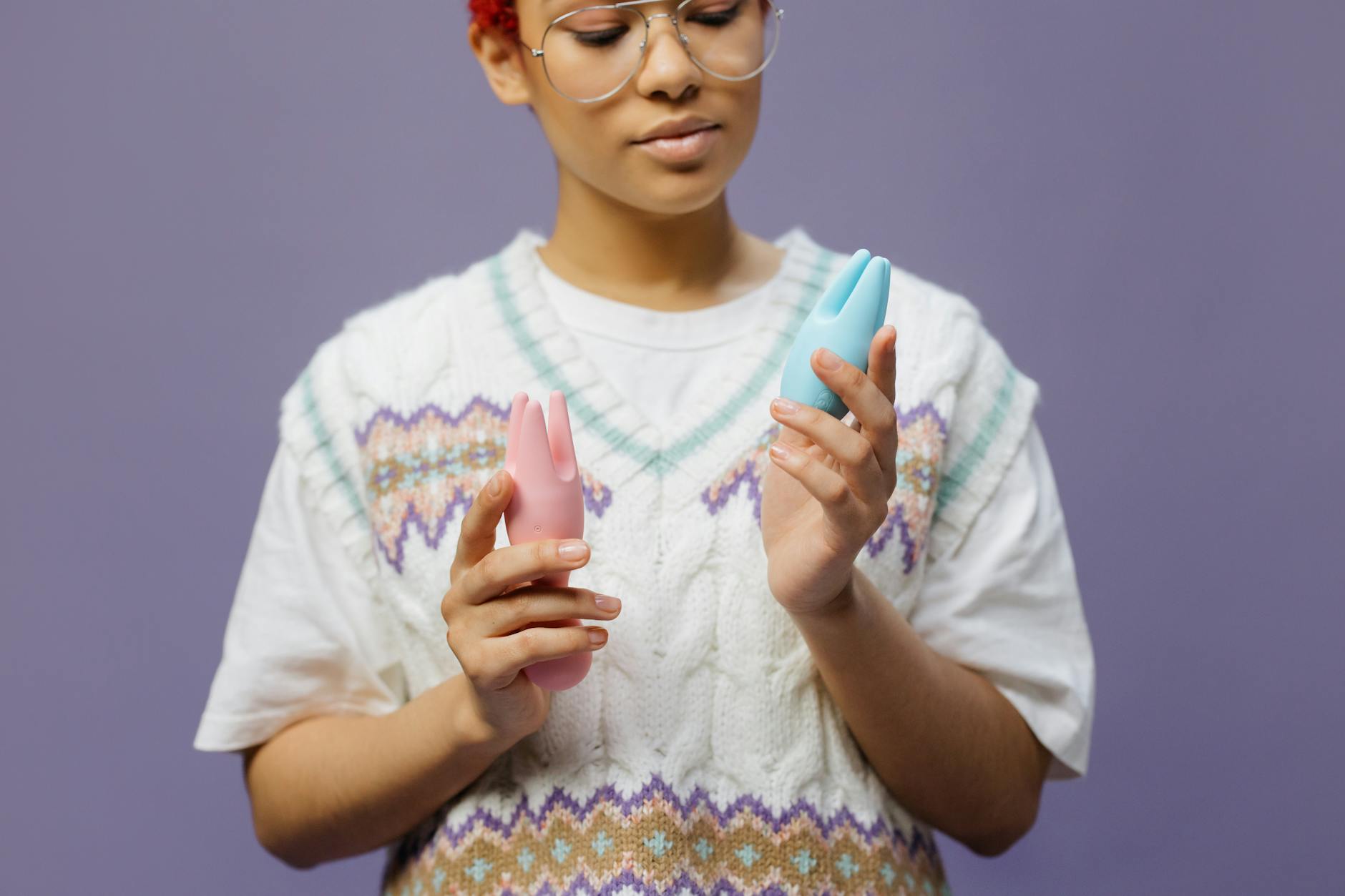
A lemon clitoral vibrator like the Lem works in this situation for one reason that has nothing to do with the vibration itself. It gives you something to focus on besides your partner's expectations.
When you have a tool in your own hands, the experience becomes about what feels good to you, not what you're delivering to someone else. The suction sensation from a lemon vibrator provides direct stimulation, which means your nervous system can relax into building arousal instead of monitoring whether you're "performing" well enough.
You're no longer trying to orgasm on someone else's timeline. You're exploring what works for your body, at your pace.
How to use it when partner pressure is the real problem
Three shifts change everything here.
First, claim solo time first. Before you introduce a lemon vibrator into partnered sex, use it alone. Multiple times. Long sessions where there's zero expectation. The goal isn't to "teach" your partner how your body works. The goal is to reclaim the experience as yours. When you know what your own arousal feels like without an audience, you're not starting from a place of shame or performance anxiety.
Second, communicate the boundary beforehand. Not during sex. Before it happens. Say something like: "I want to use a vibrator with you, but I need you to stay focused on your own pleasure, not mine. No checking in, no comments. If I want input, I'll ask." This isn't a rejection. It's a requirement for the experience to work.
Third, build the ritual around what you need, not what they need. If you need longer warm-up time, take it. If you need them to touch a different part of your body while you use the vibrator, ask for that. If you need them to face away or to be in a position where they're not actively watching, that's valid. The point is that you're designing the experience to support your own arousal, not to manage theirs.
What to do if they resist the boundary
Here's where it gets real. If your partner responds to "I need you to let me explore my own pleasure without comment" with frustration, defensiveness, or withdrawal, that's important information. That tells you their need to feel like they're "doing sex right" matters more to them than your actual pleasure.
That's not fixable with a better vibrator.
A partner who can't support your autonomy around orgasm is showing you something about what they prioritize. You can't pleasure-device your way out of that dynamic. What you can do is recognize it clearly. Couples therapy, usually with a sex-positive therapist, is worth it if you both want to shift this. If they're not willing to work on it, that's also information you need.
Using a lemon vibrator to rebuild trust in your own body
Years of partner pressure does something specific. It teaches you to doubt your own arousal signals. You start wondering if what you feel is "real" or if you're just responding to the vibrator. You lose track of what independent pleasure feels like.
A lemon vibrator in a low-pressure solo context rebuilds that. Use it for 15 to 20 minutes without any goal. Notice what patterns feel good. Notice how long it takes you to relax into sensation when there's truly no expectation. Notice that your arousal is real and valid regardless of whether it leads to orgasm.
When you can trust your own pleasure again, you can bring that trust into partnered sex. And a partner who respects that shift will match your energy.
The conversation you need to have
If you want the relationship to shift, this requires talking. Not during sex. Not when you're frustrated. When you're calm and both present.
You might say something like: "I've realized that when I feel you watching and waiting for me to come, I can't. My body shuts down. That's not about you or about what you're doing. It's about me needing to feel like my pleasure matters as much as yours. I'd like us to try something different." Then explain what you need. Maybe that's using a vibrator while they focus on their own pleasure. Maybe that's taking orgasm completely off the table for a while and just exploring what feels good.
If they respond with curiosity, you've got something to work with. If they respond with defensiveness, you're looking at a larger relationship issue that goes beyond sex.
When it's time to rebuild together
Once you've reclaimed your own pleasure in solo sessions, partnered sex can shift. You might use a lemon vibrator together, but with fundamentally different energy. You're not performing. You're exploring. You're honoring your own arousal as something that matters independently of orgasm.
Many couples find that when the pressure is off, pleasure becomes deeper for both people. That's not because the vibrator is magic. It's because you've created conditions where your nervous system can finally relax. And when you relax, real connection becomes possible.
A lemon clitoral vibrator is a tool. But the real work is reclaiming your body as your own, and your pleasure as something you deserve to experience without apology or performance anxiety.
FAQ: Orgasm pressure and finding your rhythm
Can I use a lemon vibrator if my partner gets jealous of it?
Jealousy of a toy is usually about insecurity, not about the toy itself. A conversation helps: "This is for me, not against you. It's not about replacing you. It's about me learning what I like." If they stay jealous after that, that's worth exploring in therapy. A partner who wants you to orgasm only from what they do is expressing a need for control, even if they don't mean to.
What if I still can't orgasm even without pressure?
Sometimes partner pressure is one layer of a deeper issue. If you're relaxed, you have time, there's no expectation, and you still can't reach orgasm, that might point to medication side effects, hormonal changes, or disconnection from your own body. A sex therapist or your doctor can help you figure out what's actually going on. A lemon vibrator can help, but it's not the only tool you might need.
How do I know if the pressure is the problem or if it's something else?
Simple test: use a lemon vibrator alone. If you can orgasm alone without pressure but can't with a partner watching, the pressure is at least part of the issue. If you can't orgasm alone either, something else is playing a role. Both scenarios are valid. They just point to different conversations you need to have.
Should I tell my partner I'm using a vibrator alone?
You don't owe them a play-by-play of your solo pleasure. But if you're eventually going to use one together, honesty helps build trust. Something like: "I've been exploring on my own, and I've learned what works for me. I'd like to bring that into our sex life" is honest without being a confessional.
What if my partner wants to use the vibrator on me?
That's fine if it feels good. But set the boundary first: "I'm going to tell you what pace feels right to me. I might ask you to slow down, speed up, or switch patterns. Can you listen for that?" If they can, that's partnership. If they treat it like a lesson they need to pass, you're back to performance mode.
How long before I should expect things to shift with my partner?
Honestly? Boundaries and new rituals take time. Give it at least a few weeks of consistent practice. That means solo use first, then partnered attempts with the boundary in place. If nothing shifts after a month, the issue isn't the vibrator. It's the dynamic. That's when therapy becomes the real tool.
You deserve pleasure on your own terms
Your body is not a project for your partner to complete. Your orgasm is not a reflection of their skill. A lemon vibrator can help you reclaim that truth because it puts the focus back where it belongs: on what feels good to you, at your pace, without an audience.
If you're ready to rebuild, that starts with believing you're worth the space and time it takes. You are.
Questions? Reach out at Hello Nancylem Shop. We're here to help you navigate this.