Here's what disconnection actually feels like
You know your body is supposed to feel good. You remember what that felt like. But somewhere between stress, relationship shifts, aging, medication changes, or just the grinding weight of life, the sensation switched off. Touch that used to light you up now feels like texture. Orgasms, if they happen at all, feel muted or far away. The worst part isn't the loss of pleasure. It's the disconnect. Your body stopped being a source of joy and became something you have to think about instead of just inhabit.
That numbness is real, and it's not permanent.
Why disconnection happens (and it's not what you think)
Disconnection from pleasure isn't always about arousal dropping or tissue changes, though those can contribute. Often it's about attention. When you're running on empty, your nervous system pulls blood and energy away from the extremities to fuel the core. When you're anxious or grieving, your brain literally reduces sensation in the genitals. When you're on antidepressants, birth control, or blood pressure meds, the neural pathways that fire during arousal get dampened.
But here's what I see clinically: even when the physical causes are still present, reconnection is possible. Not by forcing arousal or pushing harder. By creating the right conditions for sensation to return naturally.
Lemon clitoral vibrators, especially air-suction designs like the Lem vibrator, offer a specific advantage for people rebuilding that connection. They work with your body instead of against it.
Why air-suction stimulation works differently
Traditional vibrators buzz at a single frequency. That constant, direct vibration can feel numbing, especially if sensation is already dampened. It's like someone tapping your arm repeatedly. After 20 seconds, you stop feeling the taps.
Air-suction vibrators like lemon sexual toys work by creating a gentle seal and pulse. Instead of vibration traveling through tissue, suction stimulates the nerve endings more directly and with variability. Your nervous system stays engaged because the sensation isn't monotonous.
Second, air-suction devices encourage you to slow down. You can't rush them. The design naturally paces exploration. That pacing is what rebuilds connection.
Start by reframing what you're doing
Most people trying to reconnect with pleasure treat it like a goal to achieve. "I need to have an orgasm" or "I need to feel like I used to." Both of those create pressure, and pressure kills sensation even faster.
Instead, approach this as exploration. You're relearning your body. You might be surprised what you find.
Set aside 20-30 minutes when you're not tired or rushed. Dim the lights. Silence your phone. This isn't a luxury. It's data collection. You're learning what your body responds to now, which is different from what it responded to five years ago.

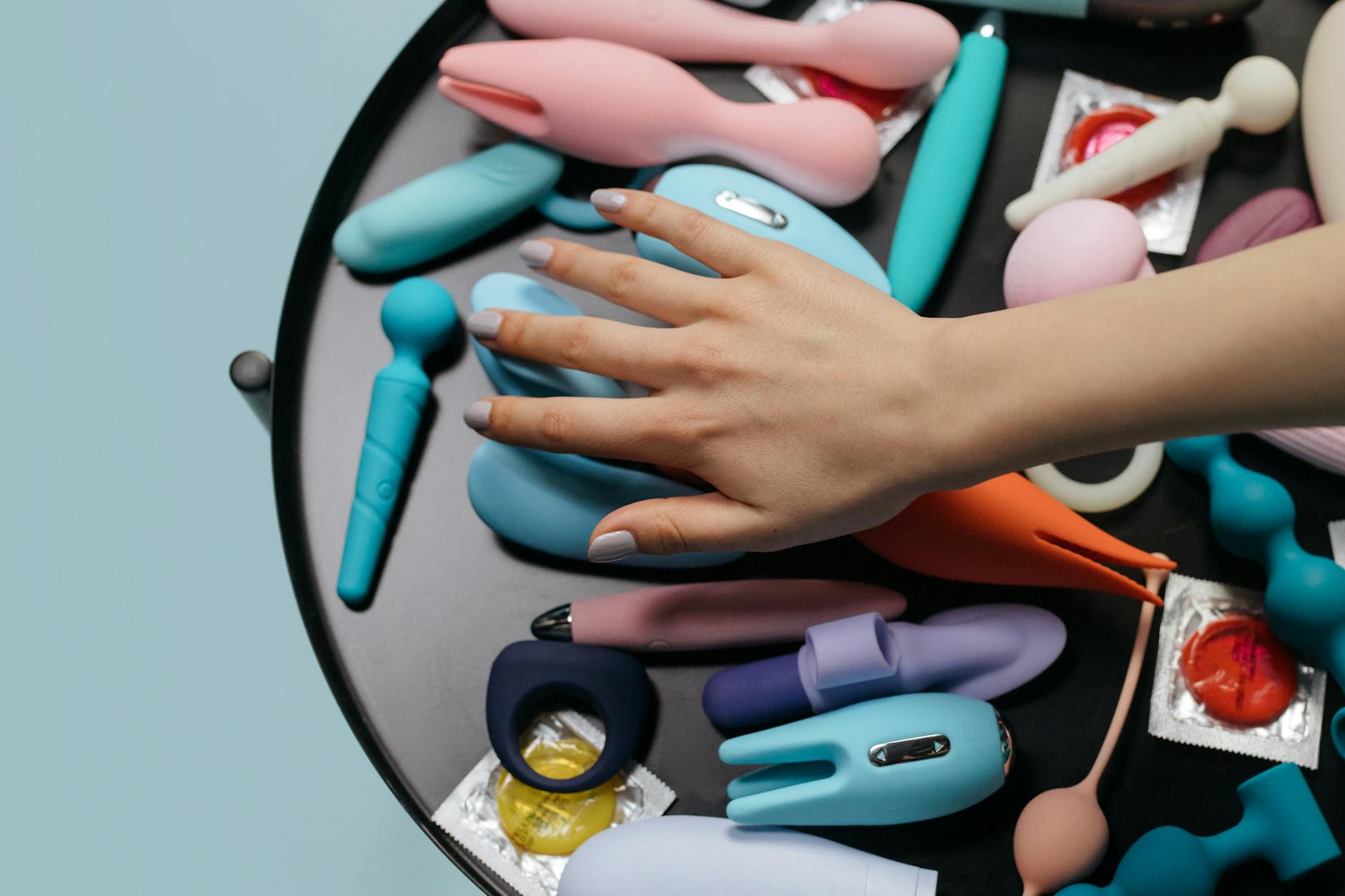
Photo by Madison Inouye on Pexels
The four-step reconnection sequence
Step 1: Touch without the device first. Spend 5-10 minutes on non-genital touch. Your forearms, your inner thighs, your collarbone. Notice where sensation is most alive. This isn't foreplay. It's a map.
Step 2: Introduce the device at the lowest setting. Don't place it directly on the clitoris yet. Hover over the area or apply it to the outer vulva first. You're waking up the nerve endings gradually.
Step 3: Move slowly. This is the hardest part for people trying to reconnect. The urge is to find the "right spot" and stay there. Instead, move the device in small circles. Pulse it. Vary the pattern. This variability keeps your nervous system engaged.
Step 4: Notice without judgment. Does it feel tingly? Numb? Uncomfortable? Warm? All of those are data. There's no wrong answer here. The point is to rebuild the feedback loop between your body and your brain.
Addressing the voices in your head
When you're reconnecting with pleasure after disconnection, the mental commentary is often louder than the physical sensation. You're thinking about how it should feel. You're timing yourself. You're wondering if it's working.
That constant narration is exactly what keeps sensation suppressed.
One technique that helps: name the sensation in a neutral way as it arrives. "Tingling." "Warmth." "Pressure." Don't layer emotion onto it. Don't rush to calling it arousal or pleasure. Just describe. This anchors you in the present moment without the burden of expectation.
If you're in a relationship, consider doing this solo first. Partners mean well, but their presence activates performance anxiety. Once you've rebuilt your own connection, bringing a partner into that experience becomes much easier.
When disconnection is tied to relationship patterns
Sometimes the disconnection from pleasure is physically rooted. Sometimes it's relational. Often it's both.
If disconnection started after a betrayal, a period of conflict, or a loss of emotional intimacy, the body holds onto that. You're not broken. You're being protective. Rebuilding pleasure in that case isn't just about sensation. It's about safety.
This is where solo exploration with a device like the lem vibrator becomes a form of self-trust. You're telling your nervous system that your body is safe, that pleasure is possible, that you get to feel good without having to earn it first through emotional labor or proof.
If you're rebuilding pleasure after a major relationship shift, lemon clitoral vibrators can be part of that reconnection, but so does honest communication with your partner about what's changed.
Managing expectations (and timelines)
Reconnecting with pleasure doesn't follow a linear path. Some sessions will feel electric. Some will feel like nothing. Both are normal. The nervous system rebuilds sensation slowly and unpredictably.
Give yourself at least 4-6 weeks of regular exploration before deciding whether this approach is working. Consistency matters more than intensity. Two 20-minute sessions per week beats one marathon session.
If you're on medication that affects sensation, talk to your doctor. Sometimes switching timing, dosage, or the medication itself can help. If disconnection is tied to depression, anxiety, or trauma, consider working with a therapist alongside your personal exploration. Pleasure returns fastest when you're addressing the nervous system on multiple levels.
The role of patience and self-compassion
Disconnection often carries shame. You think you're broken. You think you should be able to just switch arousal back on. You think something is wrong with you.
None of that is true. Your body is doing exactly what it's supposed to do when it's stressed, medicated, grieving, or unsafe. Disconnection is an adaptation, not a failure.
When you approach reconnection with curiosity instead of demand, the nervous system relaxes. When you're using a tool like a lemon clitoral vibrator from Hello Nancylem Shop, you're not trying to force sensation. You're creating conditions where sensation can safely return.
That shift in perspective changes everything.
People also ask
How long does it typically take to reconnect with pleasure using a lemon vibrator?
Timelines vary widely. Some people notice increased sensation within 2-3 weeks. Others take 6-8 weeks of consistent exploration. Factors that influence timing include what caused the disconnection, whether you're on medications affecting sensation, stress levels, and relationship dynamics. The important thing is consistency over speed. Two 20-minute sessions weekly will show results faster than sporadic longer sessions. Be patient with yourself and the process.
Can a lem vibrator help if disconnection is caused by antidepressants?
Yes, though the approach needs adjustment. Antidepressants often reduce genital sensation as a side effect. Air-suction devices work well for medication-related numbness because they stimulate nerves more directly than traditional vibration. That said, talk to your prescriber about timing. Some people find sensation improves if they take their medication at a different time of day. Combining device exploration with that conversation often yields the best results.
Is it normal to feel nothing the first few times I use a lemon clitoral vibrator?
Completely normal. When sensation has been disconnected, your nervous system is cautious about reactivating it. The first few sessions are your body learning that it's safe to feel again. Treat them as data collection, not failures. You're building new neural pathways. That takes repetition and patience. The fact that you're trying is already progress.
What if my partner wants to help me reconnect, but their presence makes me more anxious?
That's valid information. Presence and pressure often feel the same to a disconnected nervous system. Solo exploration first is typically the right move. Once you've rebuilt your own connection and feel secure in sensation, sharing that with a partner becomes easier. You can always explore how to use a lemon vibrator with a partner once you've found your own baseline.
Can reconnection happen if the disconnection is from trauma?
Yes, with support. Trauma often results in nervous system dysregulation, which manifests as disconnection from pleasure and sensation. A lemon vibrator can be part of reconnection, but working with a trauma-informed therapist is essential. Your body needs safety signals on multiple levels. Solo gentle exploration with a device combined with professional support creates the conditions where reconnection becomes possible.
How do I know if disconnection is physical (medication, aging) versus psychological (stress, relationship issues)?
Honestly, it's usually both. Even if the root cause is physical, psychological factors will amplify disconnection. The reverse is also true. The most effective approach addresses multiple levels at once. Explore sensation with a device. Reduce stress where possible. Communicate with partners about what's changed. Talk to your doctor about medication side effects. Consider therapy. Pleasure reconnection happens fastest when you're addressing the whole picture.
Your body remembers how to feel
Disconnection feels permanent when you're in it. But your nervous system is plastic. It learns to numb down. It can also learn to light back up.
Using a tool like a lemon vibrator from Hello Nancylem Shop during this process gives your nervous system something concrete to focus on. It gives you permission to slow down. It removes the pressure to perform. It's a small, consistent signal that pleasure is possible and that your body deserves attention.
Start small. Be patient. Notice without judgment. Trust that sensation returns when conditions are right.
If you want to talk through your specific situation, reach out to our team. We're here to help you find the right approach for your body and your life.